Valsad – Where Mangoes Reign and the Sands Are Black
Kapil D.
4/8/2026
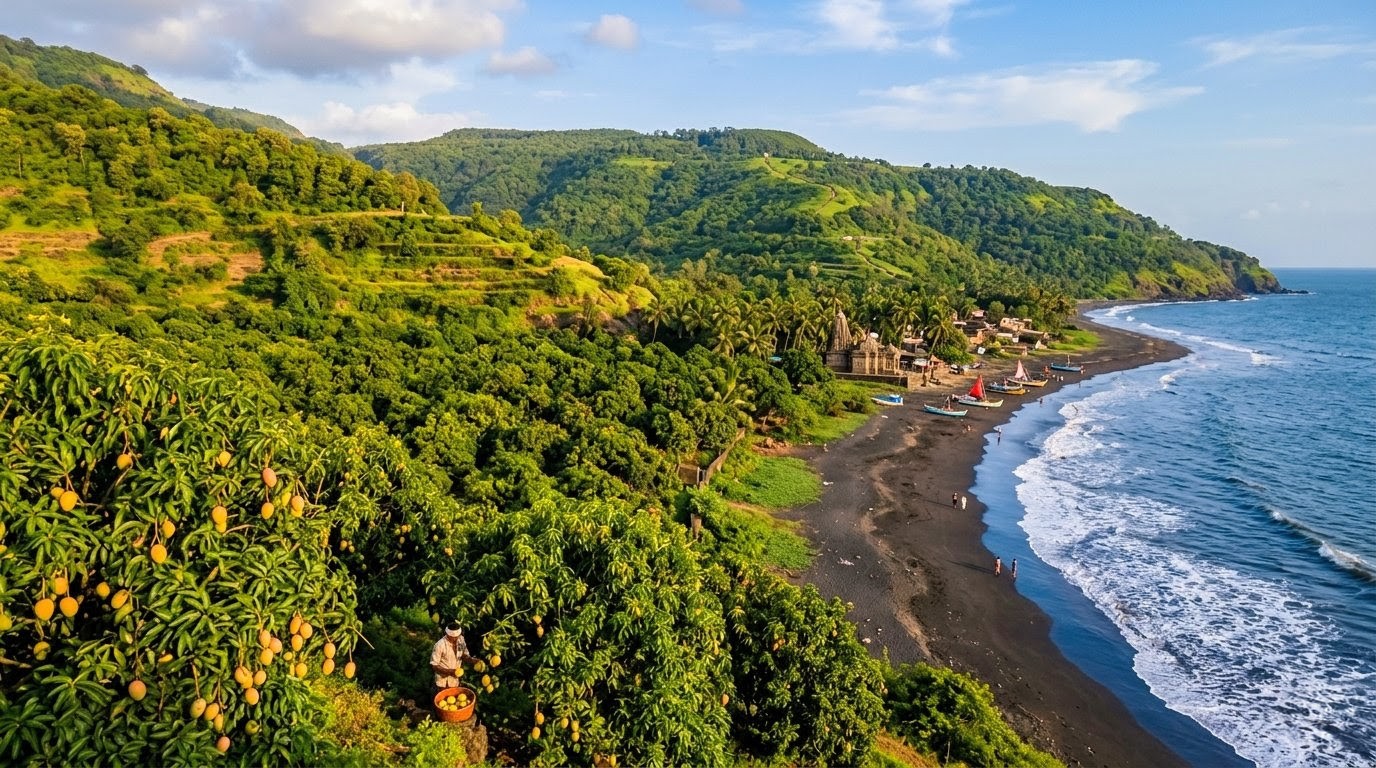
Nestled in the southern corner of Gujarat, where the Sahyadri hills meet the Arabian Sea, lies Valsad—a district of surprising contrasts. Here, the world's most celebrated mango grows in lush orchards, a beach shimmers with unusual black sand, and a hidden hill station offers cool sea breezes at 750 metres. This is the land of Hapus, royalty, and timeless natural beauty.
The Banyan City: A Brief History
Long before it became famous for mangoes, Valsad was known for its trees. The name itself comes from the Gujarati compound vad-saal—"covered by banyan trees" (vad) or "where banyan and sal trees grow". The area was once so rich in banyans that the city was literally named after them.
During the British Raj, Valsad was known as Bulsar—a name that lingers in an unexpected place: the original surname of Queen frontman Freddie Mercury, whose family had roots here. Before colonial rule, Valsad was a forested region where teak production was a major industry, part of various regional kingdoms.
On 1 June 1966, the modern Valsad district was carved out of Surat district. Today, it is bound by Navsari to the north, Maharashtra to the east, and the Arabian Sea to the west. The district covers nearly 3,000 square kilometres and is divided into six talukas: Valsad, Vapi, Pardi, Umargam, Kaparada, and Dharampur.
The King of Mangoes: Valsad's Hapus Legacy
Valsad is often called the mango capital of India, and for good reason. Its famed Alphonso mangoes—locally known as Hapus—are celebrated for their captivating aroma, unmatched flavour, and golden-orange flesh. The lush orchards surrounding the district produce some of the most sought-after mangoes in the world.
Fun Fact: Valsadi Hapus is poised to become the third mango variety in India to receive a Geographical Indication (GI) tag, joining Gujarat's own Gir Kesar and Uttar Pradesh's Dussheri. It would be the second mango from Gujarat to earn this distinction.
But this GI quest has stirred a friendly controversy. Konkan growers in Maharashtra, who received their GI tag for Alphonso in 2018, have objected to Valsad using the Hapus name. Their argument? "Call it Valsad mango, call it something else—but why steal the identity we built?". Meanwhile, Valsad argues that its region is geographically contiguous with the Konkan belt along the Sahyadri coast. The debate continues—but for mango lovers, the real winner is the fruit itself.
When to savour: The mango season runs from March to June. If you visit during these months, don't miss fresh Hapus slices, mango shakes, and even mango ice cream.
Tithal Beach: Where the Sand Tells a Geological Tale
Just 5 kilometres from Valsad town lies Tithal Beach—a stretch of coastline unlike any other in Gujarat. Its sand is not golden or white, but brownish-black, giving the shore a dramatic, almost otherworldly appearance.
Why is the sand black? The dark colour comes from heavy minerals like magnetite, often originating from volcanic or metamorphic rocks that have broken down over millennia. These mineral-rich sands are sometimes associated with placer deposits, which prospectors use as indicators of valuable minerals.
Tithal is more than just a geological curiosity. The beach offers:
· Water sports like jet skiing and speed boating
· Camel rides and local street food stalls
· The beautiful Swaminarayan Temple and Sai Baba Temple right by the shore
· The annual Tithal Beach Festival and International Kite Festival
The beach is less commercialised than many others, making it perfect for quiet sunset walks. However, visitors should note that swimming is not recommended due to the muddy sand. The best times to visit are early morning or late evening to avoid crowds.
Wilson Hills: Gujarat's Secret Hill Station
A short 60-kilometre drive inland from Valsad, through winding ghat roads, brings you to Wilson Hills—one of Gujarat's best-kept secrets. Perched at approximately 750 metres above sea level, this hill station offers cool, misty weather and a rare combination: panoramic views of the Arabian Sea from the hills.
The hill station is named after Lord Wilson, a British Governor, and features a marble Chatri (pavilion) dedicated to him. The Lady Wilson Museum nearby sheds light on the region's history and natural richness.
Key viewpoints include:
· Sunset Point – Where the sun dips into the Arabian Sea, framed by dense forest canopies
· Ozone Valley – Known for its pristine air quality and tranquil setting
· Marble Chatri Point – A peaceful spot for picnics and photography
The hills are also a gateway to the Pangarbari Wildlife Sanctuary, enriching the area's biodiversity. Nearby, you can explore the Barumal Shiva Temple and the Bilpudi Twin Waterfalls during the monsoon.
Best time to visit: October to March for clear skies and pleasant weather. The monsoon (June to September) brings lush greenery and dramatic clouds, though roads can be slippery.
Other Treasures of Valsad
Beyond mangoes, beaches, and hills, Valsad district holds several other gems:
· Tadkeshwar Mahadev Temple – Over 800 years old, this Shiva temple has no ceiling and is designed so sunlight falls directly on the Shivlinga inside. It's one of the oldest temples in the district.
· Parnera Hill – A historical and religious site with temples dedicated to Goddess Parnera, Lord Shiva, and Lord Hanuman. It's also known as a fort of Chhatrapati Shivaji Maharaj.
· Dandi Beach – Located about 30 km away, this serene beach marks the endpoint of Mahatma Gandhi's historic Salt March. The Dandi Memorial is a powerful reminder of India's freedom struggle.
· Shantidham Jain Temple – A significant Jain pilgrimage site known for its intricate carvings and peaceful ambiance.
· Vanganga Lake – A serene spot for boating and birdwatching, surrounded by lush greenery.
How to Reach & Best Time to Visit
How to Reach:
· By Air: The nearest airport is Surat International Airport (approx. 85–100 km). From there, taxis and buses are available.
· By Train: Valsad Railway Station (BL) is a major stop on the Western Railway line, well-connected to Mumbai, Delhi, Ahmedabad, and Surat.
· By Road: National Highway 48 passes through Valsad, connecting it to Mumbai, Surat, and other major cities. State transport and private buses ply regularly.
Best Time to Visit:
The ideal time is October to March, when the weather is pleasant and cool, perfect for sightseeing. The mango season (March to June) offers a special culinary delight, though summer can be hot and humid. The monsoon (July to September) brings heavy rains and lush greenery, but outdoor activities may be hindered.
Trip Duration: 2–3 days are sufficient to explore Valsad's key attractions: Tithal Beach, Wilson Hills, the temples, and—if you're lucky—a taste of the season's first Hapus mangoes.
From the shade of ancient banyan trees to the sweet burst of a sun-ripened Alphonso, from the dark mystery of Tithal's sands to the sea-swept heights of Wilson Hills—Valsad is a district that quietly astonishes. It's Gujarat's coastal treasure, waiting to be explored one mango, one wave, one hilltop sunset at a time.
Written by Kapil D.
An insightful contributor exploring the intersections of culture, technology, and everyday life.