Punugulu – The Zero-Waste Miracle
Dev
5/2/2026
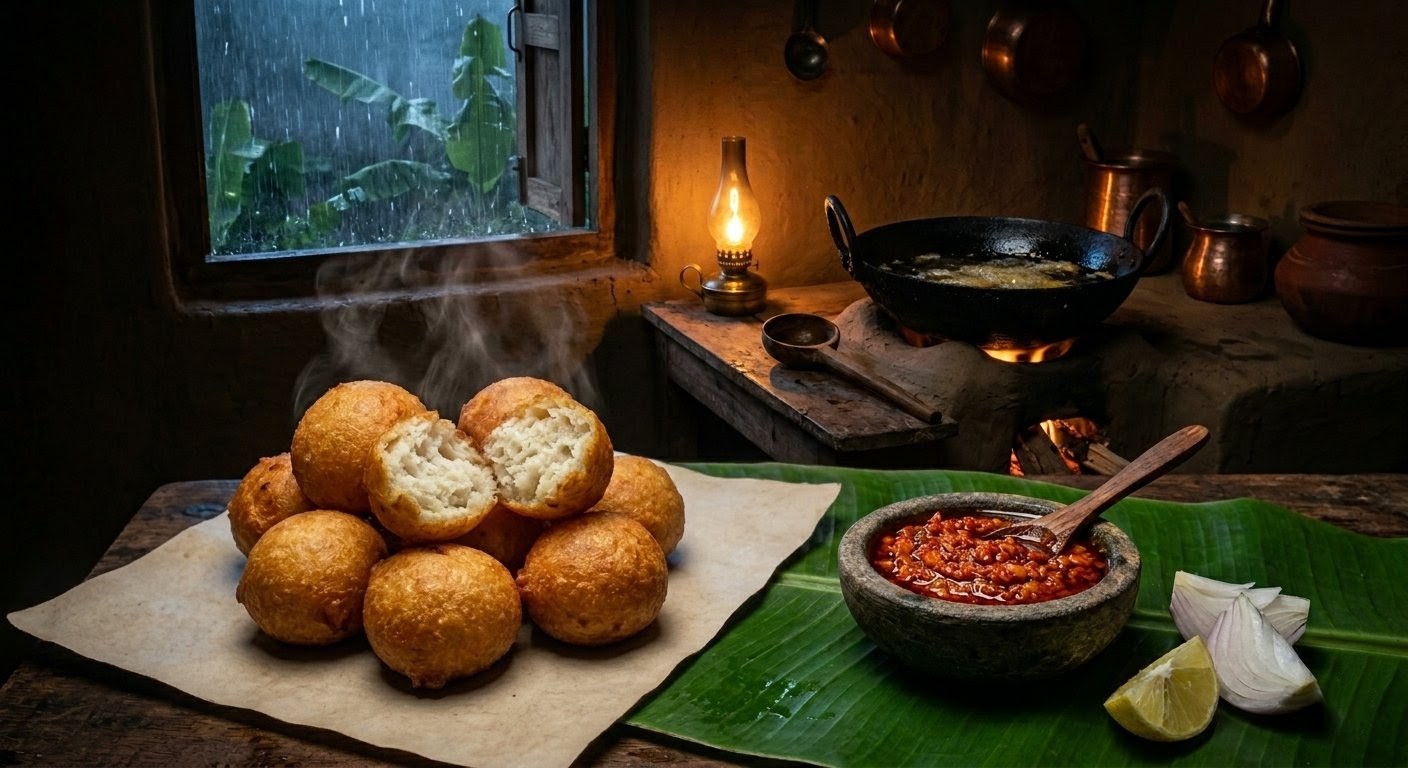
In the coastal towns of Andhra — Kakinada, Vizag, Rajahmundry — when the evening rains begin to whisper on banana leaves, a particular hunger awakens. It is not a hunger for elaborate curries or festive sweets. It is a craving for something small, round, golden, and impossibly crisp on the outside, cloud-soft within. This is the punugulu, the street child of Andhra cuisine, born not from royal kitchens but from the ingenious thrift of home cooks who refused to waste a single grain. I, your vantala maestri, now invite you into the warmth of a coastal kitchen where leftover batter finds its glorious second life.
The Philosophy of Zero Waste
Andhra cooking has always been an act of reverence — not just to taste, but to resource. In our grandmothers’ kitchens, nothing was ever discarded. The soaked water from rice, the peels of vegetables, the souring batter from the morning’s idli — everything had a purpose. Punugulu emerged from this philosophy. When the morning’s idli or dosa batter had fermented beyond its peak sourness, it was not thrown away. Instead, it was transformed into an evening snack that rivalled any planned delicacy.
The very name punugulu is onomatopoeic — it is the sound of the batter dropping into hot oil, a cheerful pu-nuk, puffing up immediately into a round ball. In Telugu homes, punugulu are not just food; they are memories of rain-drenched evenings, of cousins gathered on verandas, of the first bite burning the tongue, and of the sharp, fiery ginger chutney that follows.
Chef’s whisper: The secret of perfect punugulu lies in the batter’s sourness. A batter that is slightly over-fermented, with a pronounced tang, yields the best results. Fresh batter lacks the character; it produces dense, flat fritters. Sour batter, on the other hand, reacts instantly with the hot oil, creating an airy centre and a crisp shell.
A History Simmered in Coastal Kitchens
Punugulu’s origins are humble and undocumented, like many great folk foods. They belong to the fishing and farming communities of the Godavari and Krishna deltas. In the 19th and early 20th centuries, rice and urad dal were precious. The morning meal was idli or dosa, and the batter was made fresh every two days. By the second evening, the batter would have fermented deeply, turning too sour for soft idlis. Frying became the solution.
Coastal vendors, many of them fisherwomen, began selling punugulu on pushcarts near beaches and bus stops. They carried a large kadai of oil, a bucket of batter, and a stone mortar of fiery allam pachadi (ginger chutney). The pushcart punugulu became an institution. College students, office-goers, and families thronged these carts, and the sound of frying became synonymous with the coastal evening.
A hidden chapter: In Kakinada, there is a legendary story of a woman named Varalakshmi who, in the 1950s, started selling punugulu outside a cinema theatre. Her secret was adding a handful of rava (semolina) to the batter, which gave the fritters an extra crunch. She never revealed the trick, but observant customers noticed the coarse texture. Today, many street stalls in Kakinada still add semolina, a tribute to her innovation.
Hidden Stories from the Coastal Vendors
My ammamma grew up in a village near the Godavari delta, and she told me this tale:
In her village, there was an old woman named Bujjamma who sold punugulu under a banyan tree every evening. She had no shop, no pushcart — just a small fire, a blackened kadai, and a wooden stool. Her batter was legendary. People said she spoke to it. Every morning, she would take the leftover idli batter, add a handful of chopped onions, green chillies, and fresh coriander, and stir it with a neem stick, murmuring something under her breath. When the rains came, she would cover the batter with a banana leaf and wait. By evening, the batter was alive with fermentation, and the fritters she fried were so light they would float on the oil like flowers.
Bujjamma’s secret, my grandmother later discovered, was not magic but observation. The neem stick had antibacterial properties that slowed the souring just enough. The banana leaf allowed the batter to breathe while keeping insects away. And the murmuring? It was a rhythm, a timing device — she would stir exactly 108 times, a sacred number, which aerated the batter perfectly.
Another tale comes from the Visakhapatnam harbour. In the 1960s, sailors from the port would buy large parcels of punugulu before setting out to sea. The fritters, when fried to a deep golden, stayed fresh for two days without refrigeration. The sailors believed punugulu prevented seasickness — perhaps the ginger chutney did.
The Sacred Ingredients
For the Punugulu:
- 3 cups mildly sour idli or dosa batter (fermented, 2-3 days old if possible)
- 1 medium onion, finely chopped
- 2-3 green chillies, finely chopped
- 1-inch piece ginger, finely chopped
- 1 sprig curry leaves, finely chopped
- 1 tablespoon fresh coriander leaves, chopped
- 1 teaspoon cumin seeds
- A pinch of asafoetida (hing)
- 2 tablespoons semolina (rava) — for the extra crunch
- Salt to taste (only if batter is under-salted)
- A pinch of baking soda (only if the batter is not sour enough)
- Oil for deep frying (groundnut oil or sesame oil)
For the Allam Pachadi (Ginger Chutney):
- 2-inch piece fresh ginger, peeled
- 2 tablespoons chana dal (roasted gram)
- 4-5 dried red chillies
- A small tamarind ball (gooseberry size)
- A small piece of jaggery
- Salt to taste
- Water for grinding
- Tempering: 1 teaspoon oil, mustard seeds, urad dal, curry leaves, asafoetida
For Serving:
- Sliced onion rings
- A wedge of lemon
- Steaming hot filter coffee (optional but preferred)
The Chef’s Craft: Step-by-Step Mastery
1. Assessing the Batter
Remove the idli/dosa batter from the refrigerator or the kitchen shelf. It should be bubbling at the surface, with a distinct sour aroma — the hallmark of good fermentation. Taste it. If it is slightly tangy, you are ready. If it is very sour, do not worry — that sourness will transform into a complex, savoury note when fried.
Chef’s secret: If the batter is fresh and not sour at all, I add 2 tablespoons of thick buttermilk and let it sit for an hour. The buttermilk introduces acidity quickly.
2. Building the Texture and Flavour
Pour the batter into a wide mixing bowl. Add the chopped onion, green chillies, ginger, curry leaves, and coriander. Sprinkle the cumin seeds and asafoetida. Stir well with a wooden spoon, always in one direction — this keeps the air bubbles intact. Now, fold in the semolina. The semolina absorbs excess moisture and adds a granular texture that becomes incredibly crisp upon frying.
Taste the batter now. Add salt only if your original batter was under-salted. Remember, the chutney will be salty and spicy, so the batter should be mildly seasoned.
Chef’s secret: I reserve a small portion of finely chopped raw onion to sprinkle on the punugulu after frying — a fresh, sharp crunch that contrasts the soft interior.
3. The Soda Dilemma
Traditionally, punugulu need no baking soda. The natural fermentation provides the lift. But if your batter is not sour enough or the air bubbles are sparse, dissolve a tiny pinch of baking soda in a teaspoon of water and mix it in just before frying. Do not add soda and let the batter sit — the reaction is immediate, and delaying will cause the fritters to absorb oil and become greasy.
4. The Frying Ritual
Heat groundnut oil in a deep kadai. The oil should be about 375°F (190°C). To test, drop a tiny bit of batter — it should sizzle and rise to the surface within seconds, not brown immediately. If it browns too fast, the oil is too hot and the inside will remain raw. If it sinks and does not rise, the oil is too cold and the fritters will soak oil.
Keep a small bowl of water next to you. Dip a tablespoon or your fingers into the water (this prevents sticking), take a dollop of batter about the size of a lime, and gently slide it into the oil. Do not shape it perfectly; the irregular edges become extra crisp. Do not overcrowd the kadai — fry 5-6 at a time, giving each space to dance.
Watch the magic: the batter balls will puff up, turn golden, and rotate themselves in the oil. Use a slotted spoon to gently turn them for even colour. Fry for 3-4 minutes until they are a deep, uniform golden. Remove and drain on a newspaper-lined plate — newspaper absorbs oil better than tissue and keeps them crisp longer.
Chef’s secret: I fry the punugulu in two stages for the ultimate crunch. First fry until pale golden, remove, let them rest for 2 minutes. Then fry again for 1 minute until deep golden. This double-fry technique creates a shell that stays crisp for hours.
5. The Allam Pachadi: A Fiery Companion
Punugulu without allam pachadi is like rain without thunder — incomplete. To make the chutney, soak the dried red chillies in warm water for 10 minutes. In a blender, combine the chopped ginger, roasted gram, soaked chillies, tamarind, jaggery, and salt. Grind with minimal water to a thick, smooth paste. Taste — it should be sharp, hot, slightly tangy, with a hint of sweet from the jaggery.
Heat oil in a small pan. Splutter mustard seeds, urad dal, curry leaves, and a pinch of asafoetida. Pour this tempering over the chutney and stir. The hot oil releases the raw edge of the ginger and deepens the flavour. Let the chutney rest for 15 minutes before serving — the flavours will marry.
Chef’s secret: Add a teaspoon of sesame oil while grinding the chutney. It binds the ingredients and gives a rich mouthfeel.
Serving: The Coastal Experience
Punugulu are never meant to be eaten alone. They are a communal snack. In coastal Andhra, they are served on a piece of newspaper or a banana leaf, piled high like golden pebbles. A small bowl of allam pachadi sits beside them, and a plate of sliced onion and lemon wedges completes the picture.
The proper way to eat a punugulu: Pick it up while still hot enough to burn your fingers. Tear it open — watch the steam escape. Dip one half into the chutney, place a raw onion ring on top, squeeze a few drops of lemon, and pop it whole into your mouth. The crunch, the heat, the tang, the sweetness of the onion — it is a symphony in one bite.
Pair with a steaming glass of filter coffee, and you have the quintessential Andhra evening. In the villages, this combination is called punugulu-kaapi and is a ritual during the monsoon months.
Health Wisdom: Thrift and Nourishment
Punugulu are deep-fried, yes — but they carry the same fermented goodness as idli and dosa. The fermentation breaks down anti-nutrients in rice and urad dal, making the minerals and B vitamins more bioavailable. The live bacteria present in the sour batter are probiotics that support gut health.
Onion and ginger, key ingredients, are anti-inflammatory and aid digestion. Curry leaves and coriander bring antioxidants and trace minerals. The semolina adds a small amount of protein and fibre.
Ginger chutney is a potent digestive aid. Ginger stimulates gastric juices and reduces nausea. The roasted gram provides protein without heaviness. Tamarind is a gentle laxative and a source of vitamin C.
Traditional belief: In coastal villages, punugulu were fed to children as a teatime snack to prevent bloating and stomach aches — the ginger and fermentation working together.
Nutritional Essence (per 100g, approximately 6-8 punugulu)
- Calories: ~250 kcal
- Carbohydrates: 32 g
- Protein: 6 g
- Fat: 12 g (can vary with frying technique)
- Dietary Fiber: 3 g
- Iron: 1.5 mg
- Calcium: 45 mg
- Probiotic bacteria: Present in small amounts if batter is properly fermented.
Fascinating Tidbits
- The word punugulu is sometimes spelled punugullu in older Telugu texts, and the dish is known as punugula in some parts of the Godavari districts.
- At the Kakinada Beach Road, there is a vendor who has been selling punugulu from the same spot for over 60 years. His stall is unnamed but known simply as “Beach Punugulu Bandi,” and his allam chutney recipe is a closely guarded family secret.
- Punugulu have a cousin in Tamil Nadu called masala paniyaram, made in a special mould. But the Andhra punugulu is always free-form, fried loose in a kadai.
- During the Sankranti festival in coastal villages, a sweet version of punugulu is made by adding jaggery and cardamom to the batter — a rare treat called theepi punugulu.
- In the 1980s, a popular Telugu film had a comedic song about a punugulu vendor. The song “Punugula Bandi Vacchindira” became a folk hit and is still played during village fairs.
The chef’s parting whisper:
Punugulu teach us humility. They are born from leftovers, cooked in street-side oil, and served on torn newspaper. Yet, when you bite into that golden sphere — crisp shell giving way to a steamy, sour-sweet heart, the chilli and ginger exploding on your tongue — you taste the ingenuity of the Andhra cook. Waste not, want not, and always keep some batter aside for the evening rain.
Written by Dev
An insightful contributor exploring the intersections of culture, technology, and everyday life.