Andhra Chicken – The Rayalaseema Fire
Dev
5/1/2026
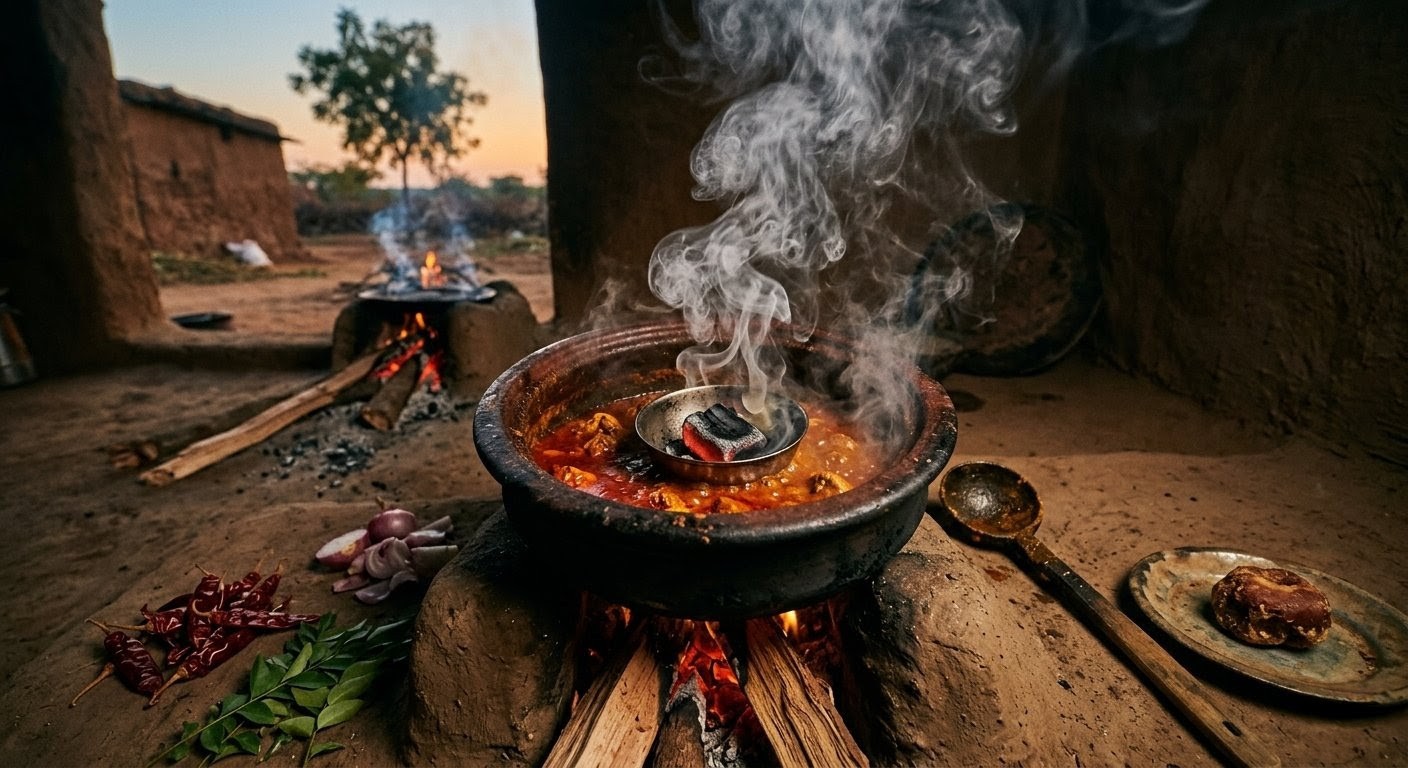
If the coastal belt of Andhra whispers through coconut and coriander, then Rayalaseema roars through red chilli and smoked stone. Andhra Chicken, our Kodi Kura, is not a dish you eat casually — it is a dish that eats your tiredness, your hesitation. It was born in the arid, unforgiving landscape of the Deccan, where the sun bakes the earth red and the chillies grow so fierce they make your eyes water just by passing the fields. I, your vantala maestri, invite you into the smoky courtyard kitchen where this curry is not cooked — it is worshipped.
The Birthplace: Rayalaseema’s Fiery Embrace
Rayalaseema — the land of kings, forts, and iron-rich soil — comprises Kurnool, Anantapur, Kadapa, and Chittoor districts. This is a landscape of extremes: blistering summers, scarce water, and a people whose spirit is unbreakable. The food of this region reflects that resilience. Andhra Chicken is a dish of sustenance and strength, created for farmers who ploughed the cracked earth and soldiers who guarded the empire’s frontiers.
Unlike the coastal Andhra chicken curry, which is tempered with coconut milk and green chillies, the Rayalaseema version is unapologetically bold. It relies on dried red chillies, slow caramelisation of onions, and a patient cooking technique that coaxes every drop of flavour from the meat and the spices. The traditional fuel was firewood from neem or tamarind trees, and the vessel was a clay pot (kunda) that breathed with the flame. The smokiness was not an accident; it was the signature.
Chef's whisper: To this day, when I cook this curry, I place a small piece of burning charcoal in a steel bowl, pour a teaspoon of ghee over it, and place it in the centre of the cooked curry, covering it for five minutes. This dhungar smoke infusion is our bridge to those ancient wood-fire kitchens.
A History Simmered Over Centuries
The origins of Andhra Chicken are intertwined with the Vijayanagara Empire (14th–17th centuries). The empire’s capital, Hampi, lies in the Deccan, and its kitchens were legendary. The royal cooks used a technique called korma-e-lal — red korma — for the warriors, packing it with dried red chillies and poppy seeds for sustained energy and pain relief after battle.
When the empire declined, the royal cooks dispersed into the villages of Rayalaseema. They carried the red korma technique, but the village kitchens replaced expensive poppy seeds with roasted gram or cashew paste, and the dish evolved into the rustic, generous Kodi Kura we know. Every family in Seema has a version; no two are identical, but all share that deep, brick-red hue and the slow-unfolding heat that rises not on the tongue but from within the chest.
A hidden political footnote: During the British colonial period, the spicy Andhra Chicken became a quiet rebellion. British officers found the curry unbearably hot, and the locals took pride in serving it to them, watching their discomfort. The chilli became a weapon of passive resistance.
Hidden Stories from the Seema Villages
My grandfather was a farmer in the Kadapa region, and his chicken curry was legendary in our village. Here is a story he told me, and I will tell you:
In the olden days, the weekly santha (village market) was the only place to buy a country chicken. The hens were never caged but ran free, pecking at grain and insects. The buyer would point, the seller would catch, and the chicken would be slaughtered fresh at home. It was believed that the adrenaline of the freshly caught bird, when cooked immediately, imparted a special vigour to the eater. My grandfather would say, “The chicken must be so fresh that it doesn’t yet know it’s dead.”
Another story concerns the chilli. In the village of Gundlakamma in Kurnool, there grows a legendary variety of red chilli called pandu mirapa — so potent that women who dried these chillies would wear a cloth over their nose and mouth. A single chilli could heat a pot of curry. When a young bride first cooked chicken in her marital home, the elders would secretly watch to see if she could balance the chilli’s fire. It was a test of her culinary courage.
A third, mystical story: The curry was never stirred with a metal spoon once the chicken was added. A wooden ladle or a neem stick was used. Metal, it was believed, would “kill” the taste, absorbing the life energy of the meat. In truth, metal reacts with the acidic tomatoes and tamarind, altering the flavour — a piece of rural wisdom now confirmed by food science.
The Sacred Ingredients
For the Marination:
- 1 kg country chicken (desi kodi), cut into medium pieces on the bone
- 1 teaspoon turmeric powder
- 1 tablespoon red chilli powder (preferably Guntur or Byadgi)
- 1 tablespoon ginger-garlic paste
- Salt to taste
- 2 tablespoons thick curd
For the Masala Paste:
- 8-10 dried red chillies (Guntur for heat, Byadgi for colour)
- 2 tablespoons poppy seeds or cashew nuts (soaked)
- 1-inch cinnamon stick
- 3-4 green cardamom pods
- 4-5 cloves
- 1 teaspoon fennel seeds
- ½ cup water for grinding
For the Gravy:
- 4 large onions, finely sliced
- 2 tablespoons ginger-garlic paste
- 3 ripe tomatoes, finely chopped
- 1 tablespoon red chilli powder
- 1 tablespoon coriander powder
- 1 teaspoon cumin powder
- 1 teaspoon garam masala powder
- 2 sprigs fresh curry leaves
- 4 tablespoons sesame oil or groundnut oil
- Salt to taste
- A jaggery lump the size of a marble (secret balance)
- Fresh coriander leaves for garnish
For the Dhungar Smoke (Optional but Sacred):
- 1 piece charcoal
- 1 teaspoon ghee
The Chef’s Craft: Step-by-Step Mastery
1. The Meat Must Be Respected
Country chicken is not broiler chicken. It has muscle, character, and it takes time to yield. Wash the pieces and pat them completely dry — water is the enemy of browning. In a large bowl, mix turmeric, red chilli powder, ginger-garlic paste, salt, and curd. Massage this mixture into the chicken pieces with your hands. Feel the flesh absorb the marinade. Cover and rest for at least 2 hours — if you have time, overnight in the refrigerator. The curd tenderises slowly, and the spices penetrate to the bone.
Chef's secret: I add a teaspoon of lemon juice to the marinade. The acidity opens the fibres and allows deeper flavour absorption.
2. The Masala Paste: The Soul of the Curry
Soak dried red chillies in warm water for 20 minutes. Drain. In a small pan, dry-roast the cinnamon, cardamom, cloves, and fennel seeds until fragrant — about 90 seconds. Do not burn them; when their oils release, they are ready. Grind together the soaked chillies, roasted spices, and soaked poppy seeds (or cashews) with just enough water to make a smooth, thick paste. This paste is the colour and character of your curry. It should be brick-red and smell earthy, smoky, and slightly sweet.
Chef's secret: If you want the true Rayalaseema depth, replace 2 of the dried chillies with dried pandu mirapa — but handle with care.
3. The Onions: The Foundation
In a heavy-bottomed kadai or clay pot, heat the sesame oil until it shimmers — not smoking, but close. Add the sliced onions and a pinch of salt. The salt draws out moisture and helps them brown. Now, patience. This is the step that separates a good curry from a transcendent one. Stir the onions continuously over medium heat. They will soften, turn golden, then amber, then deep brown — the colour of old copper. This takes 15-20 minutes. Do not rush. If they burn, start over — bitterness cannot be masked.
When the onions are mahogany, add the ginger-garlic paste. The raw smell will hit your nostrils, then fade as you sauté for 2-3 minutes. Then add the chopped tomatoes. Cook until the tomatoes break down completely, the oil separates from the mixture, and the entire mass becomes a thick, glossy junoon.
4. The Dry Spices Enter
Lower the heat. Add red chilli powder, coriander powder, and cumin powder. Stir rapidly. Dry spices can burn in seconds, and burnt spices taste like regret. Sauté for exactly 1 minute, then add 2 tablespoons of water to stop the cooking. The water will sizzle and create a paste. This is your base.
5. The Masala Paste Meets the Base
Add the ground red paste to the onion-tomato base. Stir and cook over medium heat. The paste will bubble and splutter — like a volcano, my grandmother said. Cook until the raw smell of the chillies is replaced by a roasted, sweet aroma, and the oil starts to leave the sides of the paste. This is the chad — the proof that the masala is cooked. Add the jaggery lump now. It dissolves invisibly, but it rounds the edges of the heat, giving depth without sweetness.
6. The Chicken Embraces the Masala
Add the marinated chicken pieces to the masala. Raise the heat to high and stir-fry the chicken in the masala for 5-7 minutes. You will see the chicken change colour from pink to white, and the outer edges will begin to brown. This sealing step locks the juices inside. The masala will coat each piece like a thick, red armour.
Chef's secret: I add a handful of curry leaves at this stage — not earlier. They release their oil into the hot chicken-masala mix, perfuming the meat.
7. The Slow Simmer: Let Time Do Its Work
Pour in water — but only enough to just submerge the chicken. Country chicken needs about 1.5 to 2 cups; broiler needs less. Bring to a boil, then reduce the heat to the lowest setting. Cover the pot with a lid that fits tightly. If the lid is loose, seal it with wheat flour dough — this is dum technique adapted for curry.
Now, forget the curry for 35-40 minutes (for country chicken) or 20-25 minutes (for broiler). Do not lift the lid. The steam inside is doing sacred work: breaking down the collagen, melding the spices into the meat fibres, and creating a gravy that is not watery but iguru — thick, clinging, and concentrated.
After the time has passed, lift the lid. The fragrance will knock on every door of your house. The oil will have floated to the surface, a red-gold sheen. The chicken will be so tender that it threatens to leave the bone.
8. The Final Awakenings
Add garam masala powder and a few fresh curry leaves. Stir gently. Taste the gravy. It should be hot, slightly tangy, with a deep savoury undertone and a slow-building warmth at the back of your throat. Adjust salt.
Now, the dhungar: Heat a piece of charcoal directly on the gas flame until it is red-hot. Place a small steel bowl in the centre of the curry. Using tongs, drop the hot charcoal into the bowl. Immediately pour a teaspoon of ghee over the charcoal — it will release a thick, aromatic smoke. Quickly cover the pot and let it sit for 5 minutes. The smoke infuses the curry with the memory of wood-fire.
Remove the charcoal bowl. Garnish with fresh coriander leaves and onion slices marinated in lemon juice.
Serving: The Full Rayalaseema Experience
Andhra Chicken is traditionally served with ragi sangati (finger millet ball), a robust, earthy accompaniment that soaks up the gravy and cools the heat. If ragi is unavailable, steamed rice or jowar roti are worthy substitutes. The curry is placed first on the plate — a generous, gravied portion — and the sangati is dipped into it bite by bite.
On the side, a raw onion, a green chilli, and a wedge of lemon are mandatory. The crunch of raw onion between bites of slow-cooked chicken is a textural poem. A glass of chilled buttermilk with crushed ginger and green chilli soothes the palate.
In Rayalaseema feasts, the chicken curry is always the last non-vegetarian dish served — it is the climax, and after it, only curd rice can follow.
Health Wisdom: The Heat That Heals
Rayalaseema’s cuisine is not just food; it is a climate-adapted medicine cabinet. The intense heat of the chillies induces sweating, which cools the body in the arid climate — a paradox understood by our ancestors centuries ago. Capsaicin, the compound in chillies, is anti-inflammatory, boosts metabolism, and releases endorphins — the chemicals that create a feeling of well-being.
The poppy seed paste (or cashew) is rich in healthy fats and adds creaminess without dairy, making the dish lactose-friendly. Sesame oil is packed with antioxidants, lignans, and vitamin E. The slow-cooking method retains the nutrients of the chicken — high-quality protein, B vitamins, iron, and zinc. The onion-garlic base is prebiotic, feeding gut bacteria.
Traditional belief: This curry was given to new mothers after delivery (in moderate spice levels) to restore strength and warmth to the body. The combination of turmeric, ginger, garlic, and black pepper (in garam masala) is a natural immunity booster.
Nutritional Essence (per serving, approximately 200g with gravy)
- Calories: ~340 kcal
- Protein: 32 g
- Carbohydrates: 10 g
- Fat: 20 g
- Dietary Fiber: 3 g
- Iron: 3.5 mg
- Vitamin B12: 1.2 µg
- Zinc: 3 mg
- (Values depend on the chicken cut, oil quantity, and whether poppy seed or cashew paste is used.)
Fascinating Tidbits
- The term Kodi Kura literally translates to “chicken curry,” but in Rayalaseema, kura always implies a dryish gravy — not a soup. If the gravy is thin, it is not kura; it is charu.
- The famous Guntur chicken found in restaurants across India is a milder, greener cousin of the Rayalaseema version, using green chillies instead of dried red paste.
- There is an old saying in Kadapa: “A man who cannot eat spicy chicken cannot guard the Seema border.” The dish was a test of toughness for young men.
- In some parts of Anantapur, the chicken is cooked with the skin on, a practice rare in other Indian cuisines. The skin renders fat into the gravy, adding richness.
- The dhungar technique was originally used to preserve the curry for an extra day without refrigeration — the smoke acts as an antimicrobial agent.
The chef’s parting whisper:
This curry will make you sweat. It will make your nose run. It will wake up parts of your palate you did not know existed. But after the fire subsides, you will taste the earth of Rayalaseema — red, honest, and unforgettable. Cook it slowly, serve it with love, and eat it with people you trust. Because when you share this fire, you share your heart.
Written by Dev
An insightful contributor exploring the intersections of culture, technology, and everyday life.